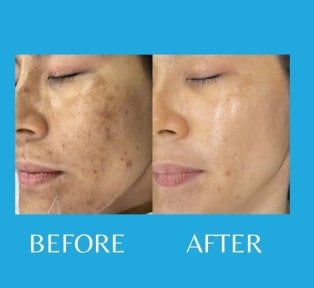
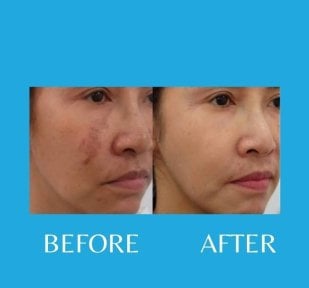
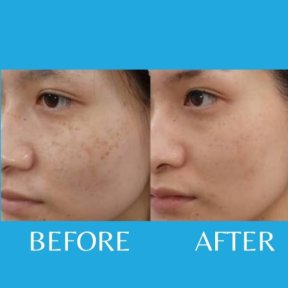
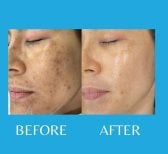
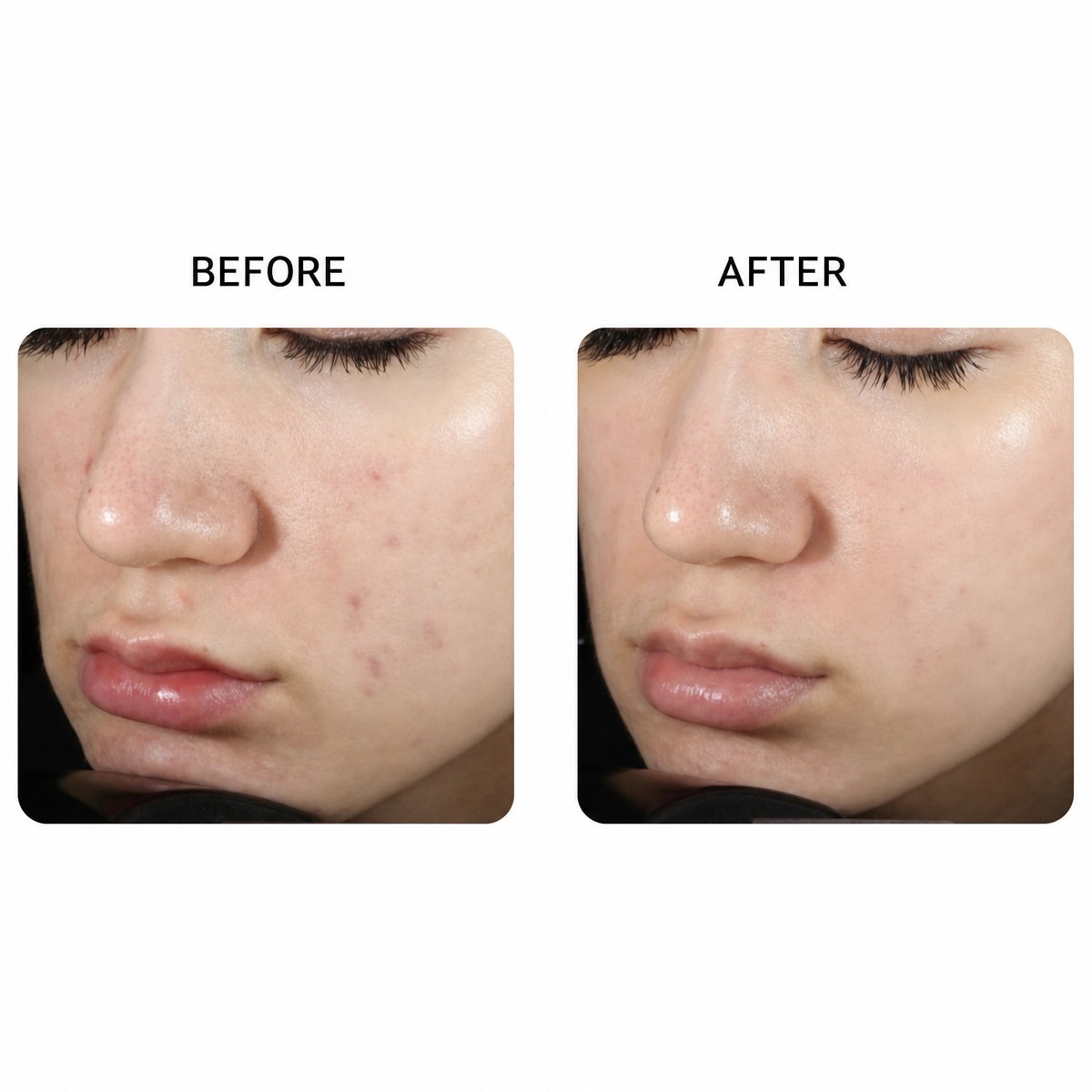
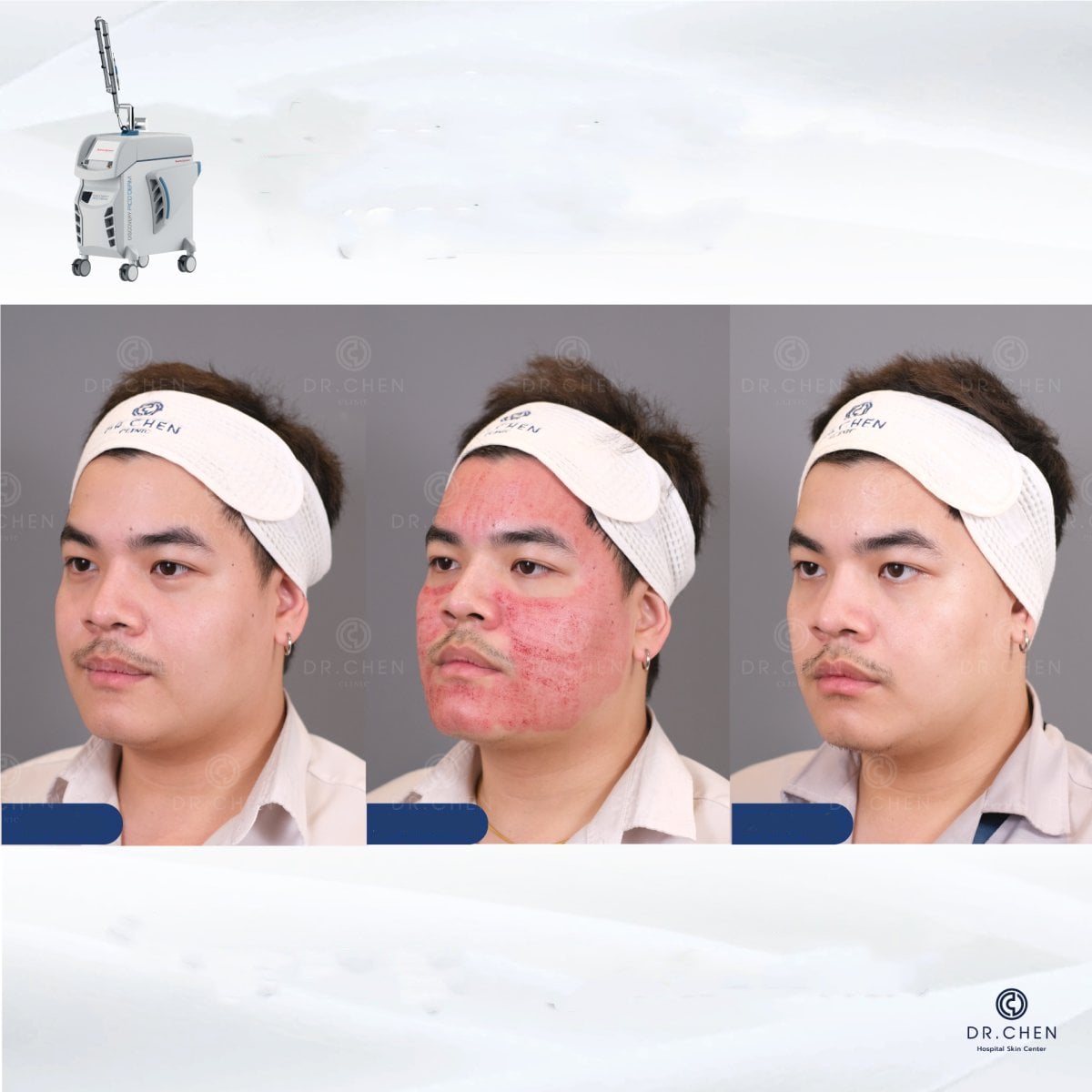
Laser skin resurfacing has a well-documented track record. A systematic review of 1,093 patients found it effective across photodamage, acne scars and other skin conditions. This covers what a price list cannot – how the treatment is set up for medium and darker skin, how to vet the clinic and its equipment, and how to protect your skin before and after the trip.
Is Laser Resurfacing Safe for Medium and Darker Skin Tones?
For Fitzpatrick types IV–VI the question is rarely whether a laser can be used, but how it is set up. The device your doctor selects and the pigment-prevention plan around it are what shape the result.
Is it safe for my skin tone?
Yes, and the evidence comes from darker skin specifically. Across 115 sessions in 45 patients with Fitzpatrick types IV–VI, a nonablative 1,550 nm fractional laser used with a lightening cream before and after treatment left about 96% of sessions free of any pigment change, and of the few that were affected only one lasted longer than a month. What decides that outcome is the technique and the prevention plan, not your skin tone on its own. Post-inflammatory hyperpigmentation (PIH) – the temporary dark patches that can follow treatment – is what to plan around.
Darker skin has more active pigment cells, which is what drives these dark patches. In a Bangkok study of 22 Fitzpatrick type IV patients treated with older ablative resurfacing, it was the most common after-effect: 68% developed it, starting about a month after treatment and lasting 3.8 months on average.
How dark marks are prevented
Sunscreen on its own is not enough here. In skin of color, a network review found sunscreen alone worked no better than placebo at preventing these marks. Ask your doctor for a proper prevention plan. Among Bookimed's Thailand partners, dermatologists such as Dr. Sirintip Jira-adsai treat pigmentation and skin discoloration with laser.
A dermatologist's prevention plan for deeper skin tones often includes:
- Gentler, pigment-sparing settings – a 1064 nm Nd:YAG or a picosecond laser passes more safely over surface pigment.
- A short anti-pigment course pairs a brief topical treatment with tranexamic acid, which has evidence for lowering laser-related pigmentation.
- Add a tinted mineral sunscreen that also screens visible light, since UV protection alone falls short in darker skin.
What Studies Show About Laser Resurfacing Outcomes
Laser resurfacing is well documented. In a series of 730 fractional-laser patients, almost 96% came through with no complication at all, the few that did occur all resolved, and the rate did not vary with Fitzpatrick skin type. The research also sets out what normal recovery looks like, which is how you tell an expected after-effect from a real problem.
What the evidence shows
Redness, mild swelling and flaking as the skin renews are steps of normal healing, not complications – they settle as the skin rebuilds.
In the 730-patient series the problems were minor and treatable: 13 acne flare-ups, 9 cases of dermatitis, 5 cold-sore outbreaks and 4 cases of prolonged redness. Scarring sits far out on the tail – fewer than 1 in 200 patients across the 1,093-patient review. Non-ablative lasers work without removing the skin's top layer. Ablative lasers remove it, which is why they need more recovery.
Reading a clinic's claims
No procedure is completely free of risk, so ask a clinic to be specific: which risks apply to your skin type, how often they happen, and what it does to manage them. A clinic that answers those questions plainly is one you can plan with. Matching the depth of treatment to your goal keeps the result high and the risk low. Use lighter sessions for tone and texture, deeper ones for scars.
How Do I Choose a Qualified Laser Doctor in Thailand?
Thailand has both hospital dermatology departments and small walk-in clinics, and the training behind the laser varies as much as the price. Credentials and accreditation are what separate them, and both can be verified in advance.
Credentials to look for
A well-qualified laser doctor holds Thai board certification in dermatology and belongs to the Dermatological Society of Thailand. Look for fellowship training in skin and laser surgery, plus several years of hands-on laser experience. Among Bookimed's partner doctors, Dr. Pimpa Tantanasrigul holds a Master's in Clinical Dermatology from Cardiff University. The credentials also include a fellowship in cutaneous and laser surgery. That is the kind of training worth looking for.
Verifying a doctor's credentials and choosing an accredited facility are core safety steps. Your Bookimed coordinator can confirm registration and certification for you.
What accreditation signals
Hospital-grade accreditation such as Joint Commission International (JCI) means enforced infection control, emergency readiness and physician supervision. That matters when you compare a full hospital with a walk-in med spa. Bumrungrad International Hospital, for example, was the first hospital in Asia to earn JCI accreditation. Three questions are worth asking your clinic:
- Meet your treating doctor – your pre-travel video consultation should be with the doctor who treats you, not a coordinator.
- A careful clinic follows a written safety checklist before, during and after treatment.
- Ask how often the doctor treats your skin tone with this laser.
Making Sure Your Laser Device Is Genuine
The device matters as much as the hands using it, and grey-market laser platforms do reach clinics. A short list of questions, and a look at the equipment during a video consultation, is usually enough to confirm what a clinic works with.
Questions to ask your clinic
A reputable clinic names the exact laser platform and manufacturer it uses. Then you can look that clinic up on the maker's official "find a provider" database. Makers such as Cynosure, Candela and Solta all publish one. If a clinic stays vague about its equipment, ask more. That vagueness is your cue.
- Ask for the device and manufacturer by name, not just "a laser".
- Serial number – a genuine clinic can confirm the machine's serial number matches the manufacturer's records.
- Request the device authenticity certificate.
What to look for on a video tour
On a video walk-through you can spot quality hardware. Look for heavy metal handpiece connectors with gold-coloured pins and coated optical lenses, rather than lightweight plastic parts. The US Food and Drug Administration (FDA) has warned patients about laser devices sold through unofficial internet channels. One analysis of energy-based devices found advertised claims can outrun approved uses. That is why confirming the platform and its approved use is worth the small effort.
How Clinics Protect Your Eyes During Facial Laser
Eye injury during facial laser work is rare because the safeguard is standardised, not improvised. Knowing what that protection looks like makes it a simple thing to raise at your consultation.
The standard safeguard
Facial lasers work close to the eyes, so eye protection is a built-in part of a safe treatment. It is a routine safeguard. Worth a quick question at your consultation. For sweeps near the eyelids, clinics place small lubricated metal eye shields over the eye under numbing drops.
Eyelid skin is thin, so simply closing your eyes is not enough on its own. Plastic shields are not used for these lasers. Metal shields are kept cool with lubricant and irrigation. A clinic can walk you through it.
What to ask about eye protection
Panels of laser surgeons and eye specialists set out practical eye-safety standards for procedures near the face. Accredited hospitals are required to document a protocol for this step. A fair question to raise is simple: "What eye protection do you use for treatment near my eyes?" A confident, specific answer is a reassuring sign.
Preparing Your Skin Before You Travel
Preparation starts weeks before the flight, not at the clinic door. Some products have to be paused in advance, and a few decisions need your doctor's input before the dates are fixed.
What to pause
Some preparation has to happen weeks ahead, so plan it well before you fly. Many clinics ask you to pause retinoid creams, such as retinol or tretinoin, for about two weeks before fractional resurfacing. This helps the skin heal predictably. It is part of the standard preparation for laser resurfacing.
If you are prone to cold sores, treatment can trigger a flare. Doctors often prescribe an antiviral tablet from the day before through roughly 7–10 days after to prevent one.
What to arrange
Tell your doctor if you have taken isotretinoin, the acne medicine also known as Accutane, in the last 6–12 months. It affects healing, and most clinics will ask you to wait. A pre-travel video consultation with the treating doctor is the moment to agree your exact stop-and-start timeline. ID Clinic Bangkok, for example, includes a video or text consultation in its treatment package.
Recovering After Laser Treatment in Thailand's Climate
Recovery abroad brings in the flight home and Thailand's sun, neither of which applies at home. Both are manageable when your dates are planned around the depth of treatment you choose.
Flying after treatment
Build in recovery time before you fly after deeper resurfacing. Cabin air is very dry and can slow the healing of freshly treated skin. Ask your doctor for a safe no-fly window for the depth of treatment you choose. If your travel dates are tight, choose a lighter, lower-downtime session. You can return to normal activity sooner than after a deep treatment.
Recovering in the heat and sun
The "treat-and-holiday" idea needs a little care here, because Thailand's strong year-round sun and heat can darken healing skin. Plan quiet, shaded days rather than the beach straight after. For the first few weeks, use a mineral sunscreen with zinc oxide or titanium dioxide. Keep out of direct sun, the standard recovery advice after resurfacing.
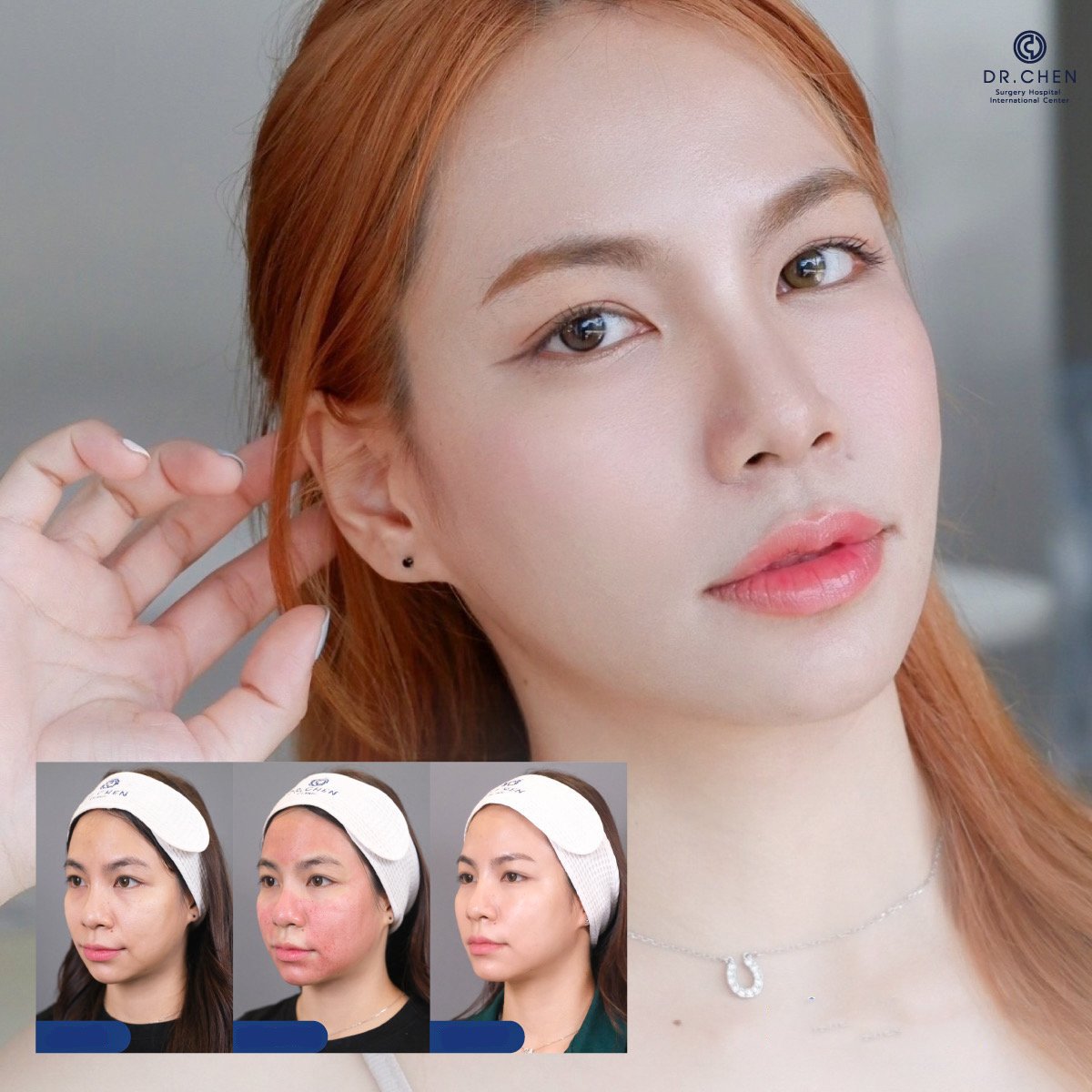
Some Bookimed partner clinics make this easier. At Dr. Chen Surgery Hospital International Center, for example, aftercare includes 24-hour nursing and free airport transfers. That helps when you are healing away from home.