














Cutting a mole out leaves a lasting scar in about 21 of every 100 removals. An Er:YAG laser leaves a scar in about 3 of every 100. That difference is why laser removal is the usual choice for a mole on the face.
With the Seoul clinics and their prices for mole removal in Korea compared, one step still comes first. You need to be sure your mole is right for a quick cosmetic removal, and to know which method leaves the smallest mark. For an everyday mole, removal is a quick outpatient visit, with no overnight stay.
Get Your Mole Checked Before You Remove It
Everyday moles are safe to remove for looks. But if a mole has changed, a doctor should look at it before any cosmetic laser. That check comes first.
When a mole needs a check first
Doctors use a simple checklist called ABCDE, and you can run through it yourself:
- Asymmetry – one half doesn't match the other.
- Border – the edge is uneven or ragged.
- Color – more than one shade in the same mole.
- Diameter – wider than about 6 mm, roughly a pencil-eraser width.
- Evolving – any change in size, shape, or color.
Any of these signs means a doctor should check the mole before any laser. Sometimes several overlap: a mole wider than about 5 mm, with fuzzy edges, uneven margins, and more than one color. Doctors call this an "atypical" mole, and they examine it closely before any treatment.
Why the check comes before a laser
A laser removes the mole one layer at a time, so nothing is left to send to a lab. A mole that needs checking is cut out whole, which keeps the tissue intact for the lab.
A handheld magnifier, called a dermatoscope, helps a skin doctor judge a mole more accurately than the eye alone. So it's worth asking whether the clinic uses one before treating your mole.
Taking a small skin sample, called a biopsy, doesn't make anything spread, so it's nothing to fear. If the sample's edges aren't fully clear, doctors simply remove a little more. Whether a mole has changed is also the question patients ask most in Bookimed's own mole-removal inquiries. That's exactly what the ABCDE check looks for.
How Doctors Match the Method to Your Mole
The doctor matches the method to the mole, weighing its size, height, and depth.
Laser for small, flat moles
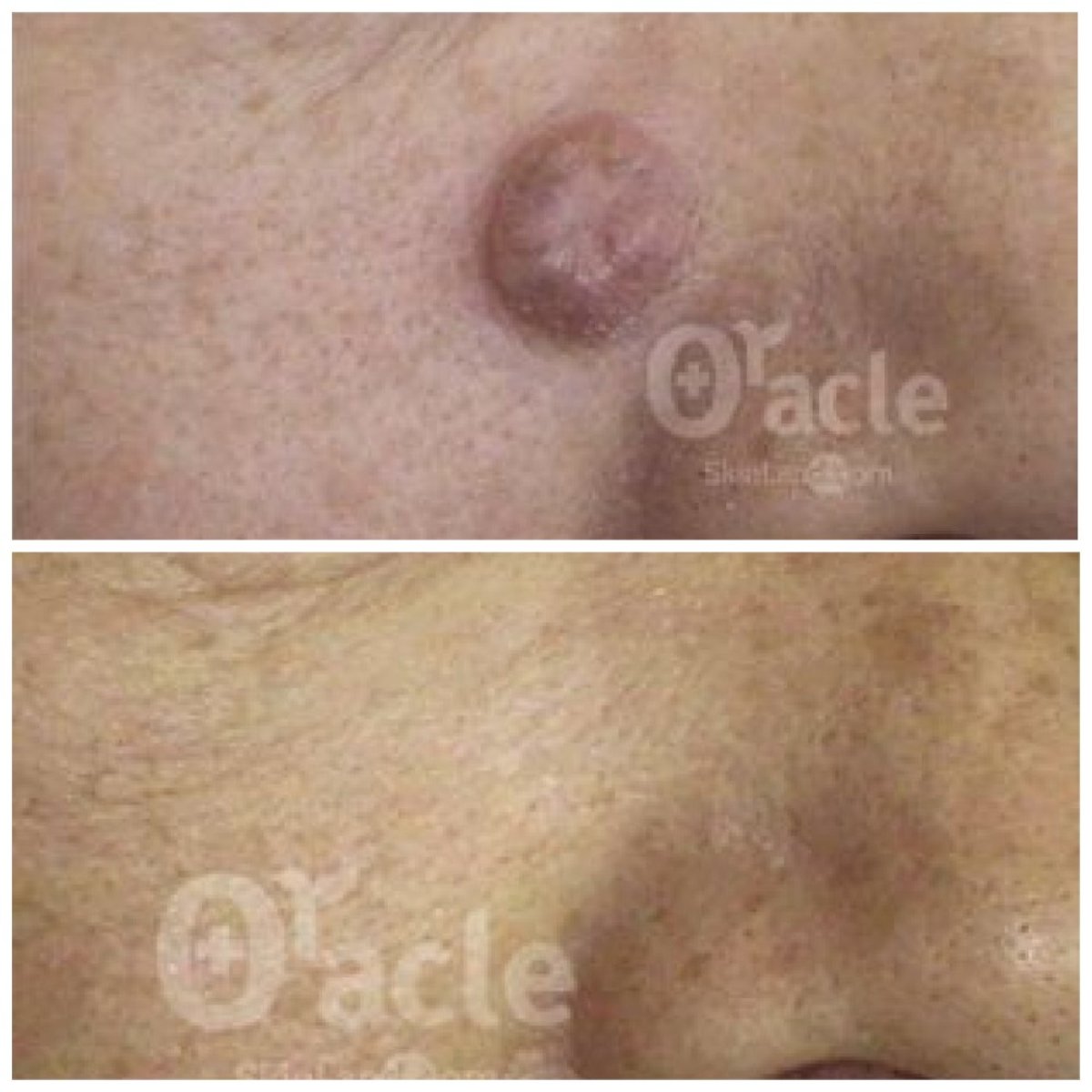
For small, flat, clearly harmless moles, roughly 1–3 mm, a laser works well. It removes the colored surface one layer at a time. Clinics use two types, a CO2 laser and an Er:YAG laser, whose very short pulses keep heat away from nearby skin. That makes a laser a good fit where looks matter most, such as on the face.
Shave removal for raised moles
For a raised, bump-like mole, a shave removal works well: it levels the mole flush with the skin, without deep stitches. It's a quick option for moles that sit above the skin.
Full removal for deep or changing moles
A deep or larger mole, roughly 5–8 mm and up, is removed by cutting the whole thing out. That way the edges can be examined. The same goes for a mole that keeps coming back or needs checking. Because a deeper mole goes further into the skin, a surface laser may not reach its base. That's also why deep moles come back more often after a laser.
Both methods are available in Korea. Clinics there offer laser mole removal as a bookable service, and they also perform surgical removal when a mole needs it.
How the Methods Compare on Scarring and Regrowth
Cutting a mole out clears it most completely, and it comes back the least often. But it leaves the most visible scar. A laser leaves a much better-looking result, though the mole comes back a little more often. These figures come from a review that pooled 46 studies and about 4,200 moles.
| Method | Mole fully removed | How often it comes back | Visible scarring | Patient look-rating (out of 10) | Best suited for |
|---|---|---|---|---|---|
| Cutting it out | 96.4% | 2.1% | 21.4% | 6.2 | Deep, changing, or recurring moles that need lab checking |
| Shave removal | 85.7% | 10.7% | 8.4% | 7.6 | Raised, bump-like moles |
| CO2 laser | 82.9% | 12.9% | 4.8% | 8.4 | Small, flat, harmless moles |
| Er:YAG laser | 80.4% | 14.3% | 2.8% | 8.8 | Small, flat moles on the face, where looks matter most |
Deeper moles come back after a laser about 82% more often than flat ones. That's why a doctor may suggest cutting out a deep mole, even when a laser would work.
Your doctor weighs these results against the type of mole you have, then recommends the method that fits your goal.
How to Check a Korean Clinic and Doctor
You can confirm both the doctor and the clinic yourself, for free, at a Seoul clinic.
Check the doctor is a skin specialist
In Korea, a board-certified skin doctor holds the title 피부과 전문의 ("dermatology specialist"). Earning it takes 6 years of medical school, a 1-year internship, and a 4-year dermatology residency. Only about 2% of licensed Korean doctors hold this specialty.
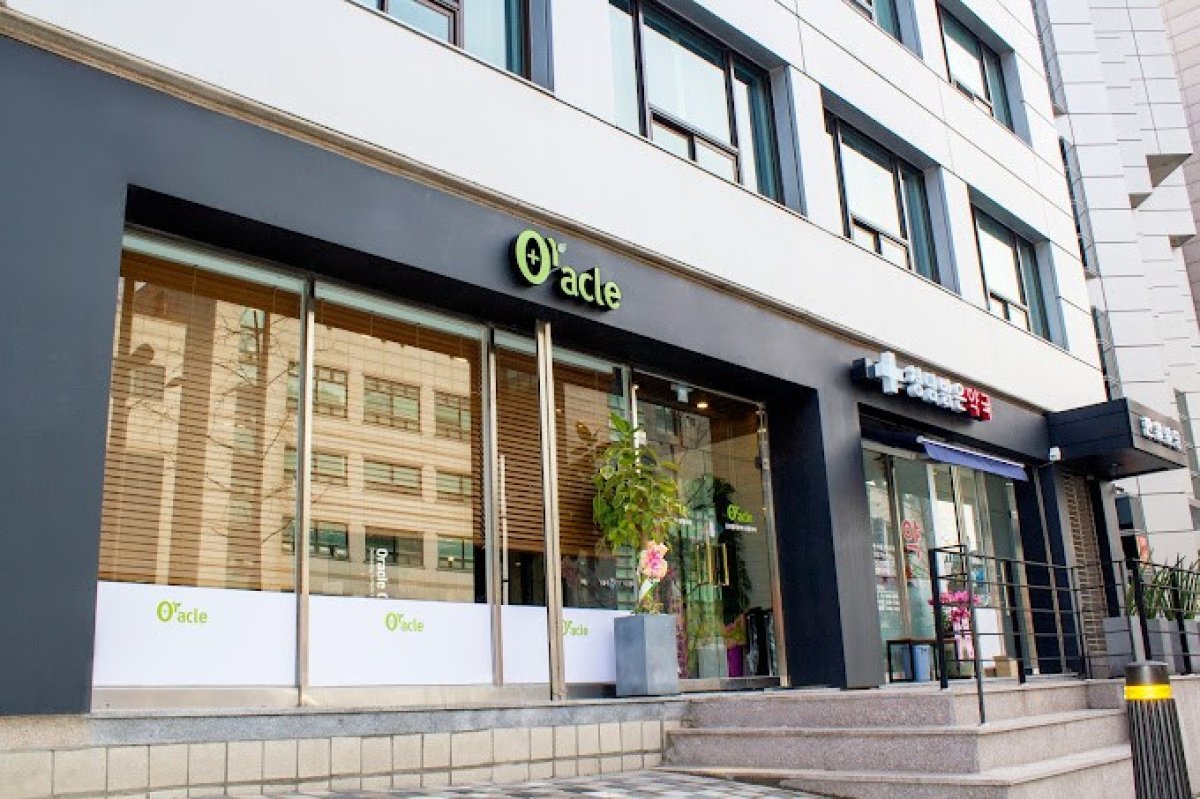
You can read the clinic type from the signboard, too. A specialist clinic's sign ends in 피부과의원 ("Dermatology Clinic"). A clinic run by a non-specialist reads 의원 (진료과목: 피부과) ("Clinic, practice subject: dermatology").
Check the clinic's license
You can confirm each of these on an official Korean database before you travel:
| What to check | What to look for | Where you can confirm it |
|---|---|---|
| The doctor's license | The dermatology-specialist title and a 6-digit license number | Kuksiwon, the national licensing board |
| The clinic's registration | A current registration on the national system | HIRA, the health-insurance review service |
| Care for foreign patients | Registration as an international-patient clinic | KHIDI's Medical Korea service |
| The device used | The approved laser or device model | MFDS, the medicines-and-devices agency |
You can protect yourself best with one request. Ask that the consent form print the name and license number of the doctor who will perform the procedure. That way, the doctor you consult is the one who treats you.
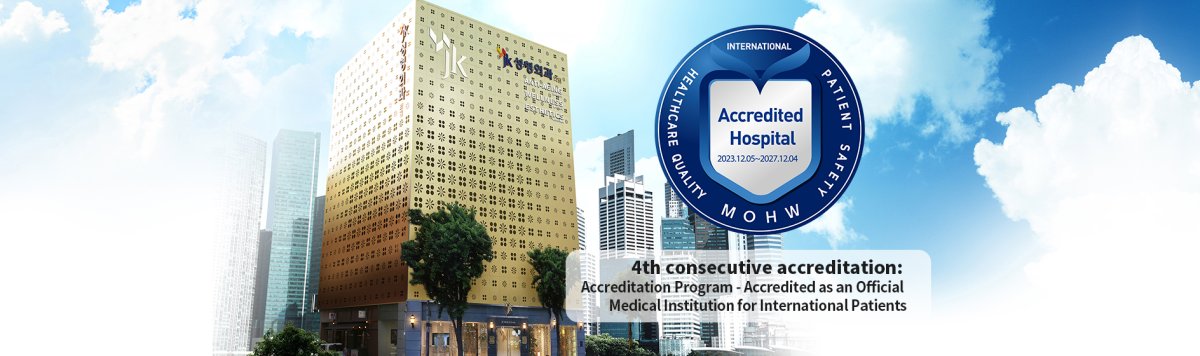
On Korean listings you'll also see accreditations like KOIHA, Korea's national healthcare-accreditation program, and KAHF, a national certification for international-patient standards. Both show that a clinic meets a recognized national standard.
Scar Care and Sun Protection in Korea
For a small, harmless (benign) mole, healing is usually quick. The marks fade over months, and a few simple steps help the scar settle well. A laser removal is numbed with a cream, while a shave or cut-out removal uses a small local anesthetic injection.
When the stitches come out
Only a cut-out removal leaves stitches, since a laser or shave wound has none to take out. When they come out follows a schedule set by the body area rather than the mole itself, and the thread matches that too – the finest on the face, the thickest on palms and soles. Most patients fly home before removal day, so ask the Seoul clinic to write the date on your discharge note.
| Where the mole was | When the stitches come out |
|---|---|
| Face | 3–5 days |
| Arms | 7–10 days |
| Trunk | 10–14 days |
| Legs | 10–14 days |
| Hands or feet | 10–14 days |
| Palms or soles | 14–21 days |
The face comes first, which keeps stitches from leaving lasting marks. A surface laser or shave wound closes within days to about a week. A stitched cut-out wound heals in about two to three weeks. The scar then keeps softening and fading for months afterward.
Keeping the scar and marks light
Sun protection is the one thing you control most. Once the spot has healed, put sunscreen of SPF 30 or higher on it every day while the scar is still fading. Darker skin tones show temporary dark marks more easily, so this matters most for them. Silicone gel or silicone sheets help keep a raised scar flat, once the wound has fully closed.
Recovery from a mole removal is usually quick and straightforward, and those who choose the laser have the shortest downtime.
What Changes Your Final Cost
Your final bill comes down to a few practical things, and one tax rule has recently changed.
What moves your final bill
Two costs are worth planning around before you travel:
- Removing several moles in one visit lowers the rate for each one.
- Sending a mole to a lab for checking adds a separate fee.
Doing several moles together is the main way to keep the per-mole rate down. That's why Bookimed's intake asks how many you're considering, so you can agree the full quote before your appointment.
Tax and airport practicalities
One tax rule has changed. The refund visitors could once claim on cosmetic and aesthetic treatments no longer applies. Plan around the full quoted price, with no treatment refund at the airport. You can check the current rules on Korea's official Medical Korea portal before you travel. Duty-free shopping for sealed cosmetics, such as at Olive Young, is separate and follows normal retail tax rules.
Removing a small, harmless flat mole with a laser takes only about 15–40 minutes. A 3–5 hour layover at Incheon Airport can fit both an assessment and a removal. Bookimed's Korean clinics are in Seoul, about an hour away. If a mole needs checking, the clinic refers it for a full removal with lab analysis.
Flying within about a day is fine for a small wound. Keep it clean and covered with a hydrocolloid patch, a thin protective dressing, because cabin air is drying.